
Sam Madore, Manager of Marketing & Communications, Mental Health Foundation of Nova Scotia
Difficult conversations open the door to connection, support and hope.
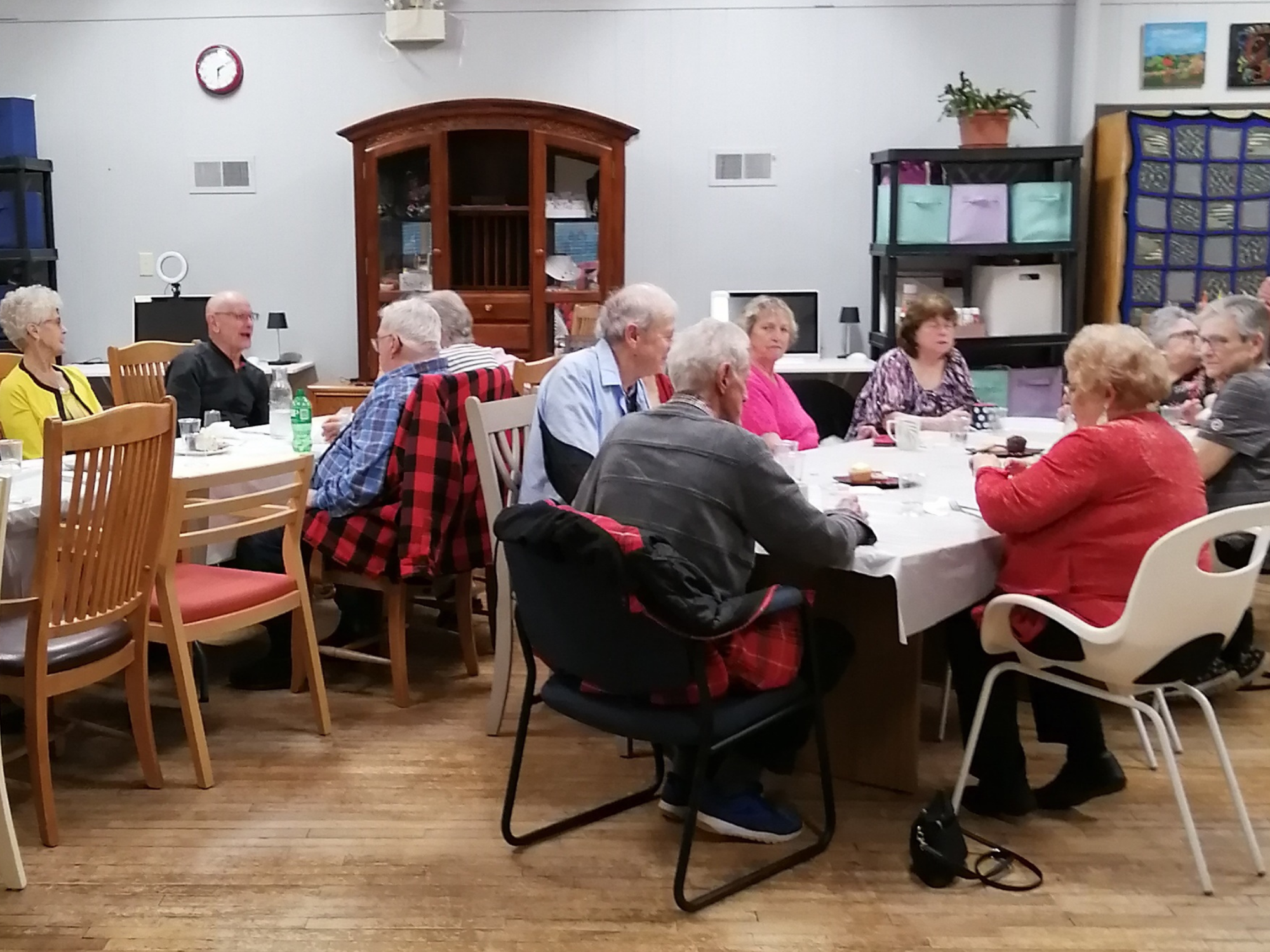
At the Flourish 55+ Centre Healthy Activity Society in Bridgewater, seniors gathered over the past year for a program with a title designed to spark attention: Let’s Talk Senior Suicide.
Supported through a grant from the Mental Health Foundation of Nova Scotia, the initiative created space for older adults to openly discuss topics many people avoid — suicide, loneliness, terminal illness, grief, mental health, MAiD, hospice care, and the realities of death and dying.
For Executive Director Lisa LeBlanc, the idea for the program came directly from conversations already happening inside the centre’s walls.
“We have several individuals here that have been diagnosed with terminal cancer and other terminal diseases,” she says. “They were dealing with loneliness, isolation, severe mental health struggles and a fear of what was ahead.”
Many seniors, she explains, were carrying those fears quietly.
The program brought together a wide network of community partners, including mental health professionals, senior safety coordinators, police, MAiD representatives, hospice and end-of-life advocates, nurses, and a retired forensic psychotherapist. Through presentations, group discussions and resource sharing, participants were encouraged to ask questions and have honest conversations in a safe and supportive environment.
“What really brought it home,” says LeBlanc, “was when one of our members, who we all loved dearly, was diagnosed with terminal cancer and made the decision to utilize MAiD. It sparked questions. What is MAiD? What does dying with dignity look like? What supports are available?”
The response from seniors was immediate.
“Contrary to popular belief, seniors think about death and dying every day,” says LeBlanc. “They’re okay talking about it. They just need a place where they feel safe enough to do that.”
Presentations often lasted several hours, with participants staying afterward to continue conversations around the table. Family members and friends began attending together. Word spread across Lunenburg County, Queens County, Chester and beyond.
By the end of the project, hundreds of seniors had participated.
For many attendees, the sessions helped replace fear and uncertainty with information and connection.
“One person told us it was such a hard topic at first,” says LeBlanc, “but as the program went on, they felt much more secure in the process of death and dying and understanding what their options were.”
The initiative also highlighted the powerful connection between mental wellness and social connection.
Isolation and loneliness are among the biggest challenges many seniors face, especially after retirement, illness, loss of a spouse, or years of reduced social interaction following the pandemic.
“Living alone, eating alone, doing everything alone — people start to feel disconnected from their community,” says LeBlanc. “What Flourish does is bring people back together and remind them they still have so much to offer.”
That sense of connection continues through another Flourish program called Grief, Loss and Life Support, which grew alongside the Let’s Talk Senior Suicide initiative. The peer support group now meets twice weekly and regularly welcomes eight to 12 participants at a time.
“We couldn’t stop it,” LeBlanc says. “People needed it.”
The group gives seniors a place to openly discuss terminal illness, anxiety, grief, loneliness and fear while supporting one another through shared experiences.
“Sometimes just being listened to and heard makes all the difference,” she says.
The project also trained volunteers through ASIST suicide intervention training, helping equip community members with the skills and confidence to navigate difficult conversations around suicide and mental health.
LeBlanc says one of the most important outcomes of the program was helping seniors feel empowered to seek help.
“Many seniors grew up believing you just dealt with whatever hand was dealt to you,” she says. “They don’t want to burden the healthcare system or take a spot from someone else. But now we’re seeing people stand up for themselves and say, ‘I need help.’”
For LeBlanc, that shift matters deeply.
“These are hard conversations,” she says. “But avoiding them doesn’t make them go away. When people understand their options, when they know where to turn and feel supported, some of that fear and anxiety starts to lift.”
With support from the Mental Health Foundation of Nova Scotia, Flourish was able to turn a difficult topic into an opportunity for compassion, connection and understanding — one conversation at a time.
This story was published on August 18, 2026 in the Chronicle Herald’s Senior Living column.